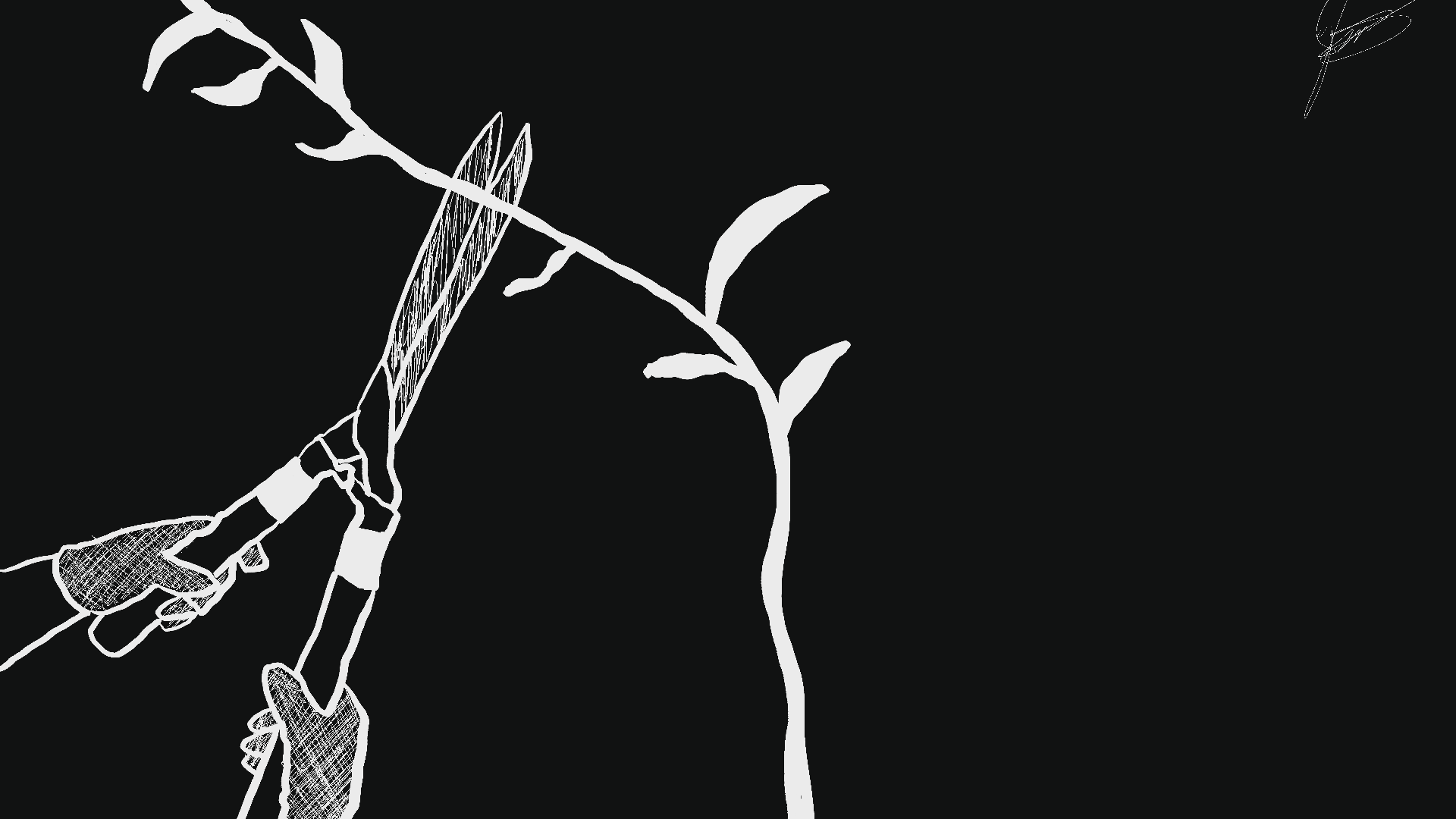
prunning a significant part of my life…
I have decided. This is a decision I’ve sat with for over a year. I needed to make sure it was not an emotional one but one grounded in reality.
I remember last year in a product design class I took when one of the guest speaker asked how I’m going to pivot since artificial intelligence is coming for graphic design. I had been thinking about it but someone asking it amplified my concerns but GPT isn’t my reason even though that is one reality. There is more that I considered and perused.
For years, graphic design was my language. It still is. Design shapes how I see the world, in composition, storytelling, emotion, systems, beauty, culture, color, all of it but lately, I’ve been sitting with a difficult realization :: I want to cut graphic design.
The value of design has changed: People still need design and always will, but they no longer value the process the same way. I don’t think most people ever did. People value speed, in volume, in visibility and in output especially online and that makes sense for a capitalism but for intentional work and consideration of the designer, it doesn’t.
And in places like Nigeria, the value conversation around design is even more brutal. Designers are often expected to perform miracles on tiny budgets while carrying the full emotional and strategic weight of a business. The industry has trained an entire generation of creatives to overproduce and undercharge while calling it passion. It’s these people I blame.
Nobody talks enough about burnout in commercial design: There is a different kind of exhaustion that comes from creating constantly on retainer. Designing day in and day out for years. Endless social graphics, campaigns, revisions, decks, launches, mood boards, “Can we try another option?”; most especially the social graphics.
For almost four years, I have lived inside that cycle and I am currently creatively exhausted and simultaneously creatively under-stimulated. I’m making things all the time, yet somehow I find myself asking if it’s worth it. Don’t get me wrong, I am thrilled about my creative output and what it means for clients I work with but it has become repetitive, predictable, optimized for algorithms instead of imagination. That’s the part we’re not truly prepared for.
My business and creator brain are constantly fighting each other. I believe this is the true source of my fatigue and “leaving graphic design”.
The business side of my brain goes “scale, creating a system for this, reach out to that, produce more work, create more offers, stay visible, create content, keep clients happy” …while the creator side says “slow down, you need more time for this work, explore more, experiment on this idea, try this concept.”
The truth is commercial design is a completely different industry from artistic creation and I knew this before I started design as a service but not to this extent. The thing is both parts are needed to run a creative studio but I can’t lie, I no longer enjoy client work the way I used to. We can have a whole argument here about whether work is to “be enjoyed”.
I have to choose either the director/operational side or the designer/executor side but doing both cannot work for me anymore. Something has to give.
I’ve also found that design and art while similar in principle are not the same.
My client’s vision and outcomes are my priority and I don’t want to hold space for that anymore as much as I have treasured this in the past.
There’s also the instability of the business where I could be fully booked one month and anxious the next. People romanticize freelancing until they experience the emotional unpredictability of attaching survival to creative output. Now AI enters the picture, accelerating production speed while lowering perceived effort of design as a whole.
The AI-is-coming-for-our-jobs-alization of the century: AI disrupted graphic design already and its doing a terrible job. Right now, a lot of AI-generated design feels hollow, generic, over-rendered and soulless. You can tell when a flyer was prompted by someone who doesn’t actually understand design language. The type feels off, spacing is awkward, visual hierarchy is misplaced and the concept rarely goes deep if there’s even one. But as with all things AI, the tools are improving fast, and I believe that designers who will survive this shift are the ones who actually understand design and can speak it fluently.
Beyond taste and aesthetics, designers now need vocabulary. We need language; we always have if we’re being honest but it’s important and more pronounced in the AI age. You need to know how to communicate ideas precisely because prompting is now a design skill of its own.
Ironically too, AI is exposing those who understand the science of design versus those who only learned software (aka Canva) which is the difference most clients cannot tell. So how do you explain value to an audience that can’t tell the difference? Could it be to stop catering to said audience?
What happens post-pruning?
I’m not fully certain. Honestly still praying about it but I know handmade work becomes more valuable because people will start craving evidence of humanity again. For design, this means texture, organic, hand drawn, imperfection, process, tangible things, the craft. Human-made things become emotional luxury in automated eras and I think that’s where I’m headed.
Back to curating intellectual property. Back to traditional art mediums (oh how I miss painting on a canvas) and tactile experiences. Back to slow creation. I want to build things, objects, experiences and ideas that can outlive trends.
Starting November, I’m choosing to design things that breathe slower. This is me returning to art and the art of design. I will still take client work — the ones that align with the value of design.
Side Note: Anticipatory grief is a word I learned this year. It is simply feeling sad before the loss occurs. Like grieving for a parent’s death before it happens, missing them in advance for the things you won't get to do together in the future and while this is something I struggle with, I have also been a state of anticipatory grief over this decision but it’s a decision I have to make just as death is inevitable.
in full color,
gbems